
What is SoftWave Therapy and How Does It Accelerate Joint Recovery?
/
Persistent joint discomfort often forces people to give up their favorite daily activities, like playing golf or running in local parks. Traditional treatment approaches frequently rely on temporary fixes like cortisone shots or prescription pain medications that mask symptoms without fixing the structural tissue damage. Over time, hiding the discomfort allows the underlying injury to worsen, leading many individuals to consider invasive joint surgeries. Advanced restorative technologies now offer a non-invasive option to break this cycle and stimulate natural tissue healing.
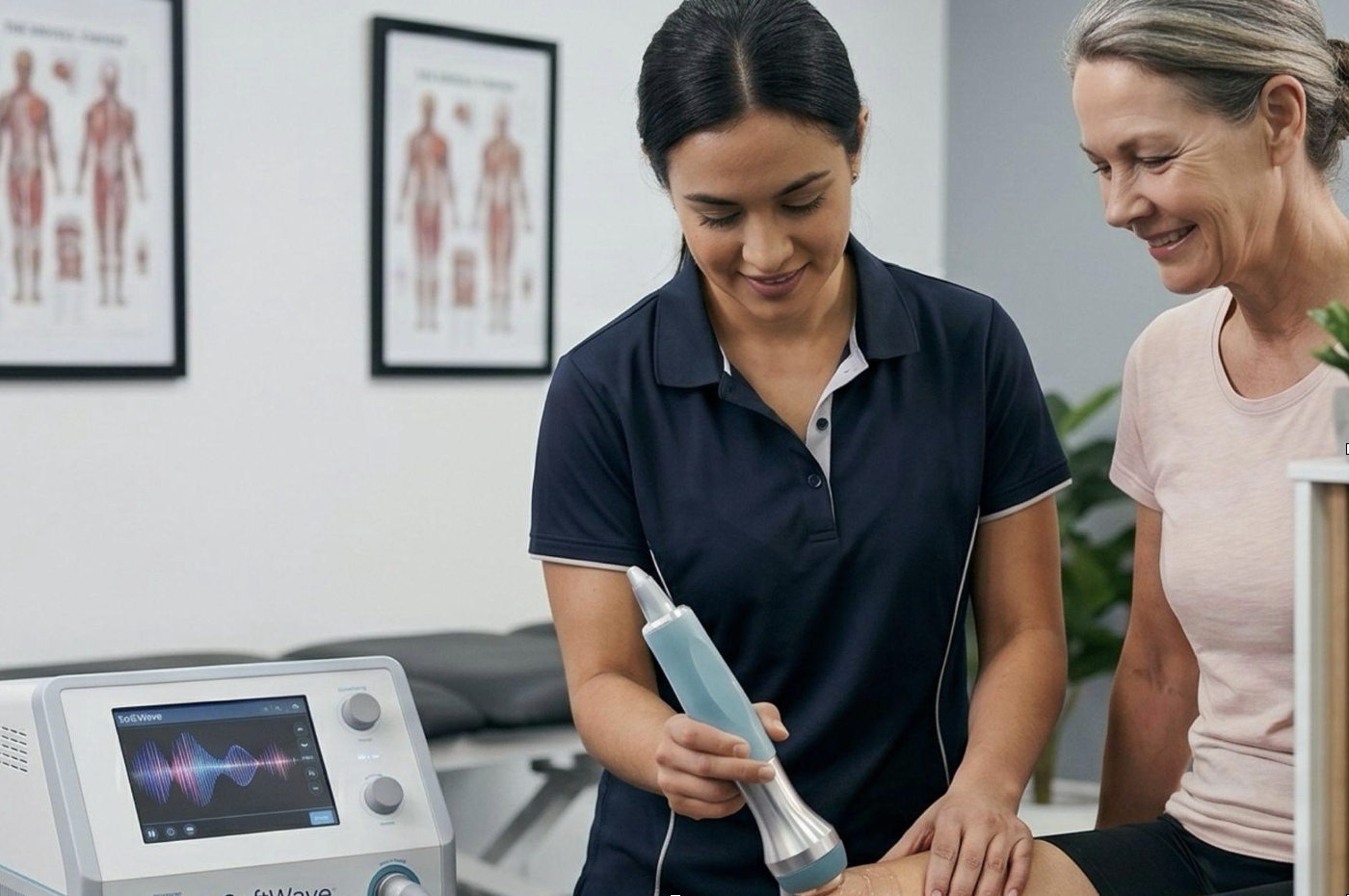
SoftWave therapy utilizes patented electrohydraulic shock waves to initiate a targeted cellular response directly inside damaged joint tissue. This advanced treatment sends acoustic energy pulses deep into painful areas to activate your body's dormant repair mechanisms. Unlike surgical procedures, this office-based option requires no downtime, no injections, and no pharmaceutical prescriptions. Investigating how this technology works helps you make an informed decision about managing your physical recovery and reclaiming daily mobility.
Why Do Electrohydraulic Shock Waves Outperform Traditional Laser Treatments?
Acoustic wave devices vary significantly based on how they manufacture and deliver energy pulses to human tissue. Many physical therapy offices use standard low-level lasers or piezo-electric devices that deliver narrow, superficial energy beams. These older options struggle to reach deep joint environments effectively, often requiring numerous repetitive sessions to yield minor results. Electrohydraulic technology stands apart by generating a true supersonic shock wave that covers a much wider and deeper treatment zone.
The acoustic pulse travels at speeds exceeding three thousand miles per hour, creating a sudden, positive pressure wave followed immediately by a negative pressure phase. This rapid shift creates a physical phenomenon called cavitation, which gently stretches cell membranes without tearing the surrounding tissue. This mechanical stress serves as a biological wake-up call, forcing sluggish cells to resume normal cellular metabolism and structural repair. The broad energy distribution allows a technician to address an entire knee, shoulder, or ankle joint in less than fifteen minutes.
How Does Unfocused Acoustic Energy Pinpoint Hidden Areas of Inflammation?
Many medical devices utilize focused energy pathways that target a tiny, predetermined mathematical point inside the body. While focused waves are highly effective for breaking up dense kidney stones, they are less effective for treating widespread joint inflammation. SoftWave devices utilize a patented unfocused applicator design that spreads the acoustic energy across a wide, cone-shaped field. This unique design allows the acoustic waves to travel smoothly through healthy tissue while reacting uniquely when encountering damaged areas.
When the unfocused wave passes through normal, pliable tissue, the patient feels little to no sensation because the cells flex easily.
The moment the wave hits areas characterized by dense scar tissue or chronic inflammation, the acoustic energy meets physical resistance.
This resistance creates a brief, noticeable awareness that helps the technician map out the exact boundaries of your injury. This real-time diagnostic feedback ensures the treatment targets the precise origin of your physical limitation.
What Happens at the Cellular Level During a Restorative Acoustic Session?
The primary goal of acoustic wave care is to trick the injured joint into believing it has sustained a brand-new, acute injury. Chronic joint issues often stall in a permanent state of low-grade inflammation where the body stops trying to fix the original tear. The mechanical force of the acoustic pulse forces the local tissue to release specific signaling molecules that restart the natural healing cascade.
The sudden pressure shift triggers the immediate release of cellular adenosine triphosphate, which provides the raw fuel your cells need to repair damage. It also stimulates the production of nitric oxide, a compound that relaxes local blood vessels and dramatically improves regional circulation. This influx of fresh blood removes stagnant metabolic waste products that accumulate inside arthritic joints, reducing stiffness. By changing the chemical environment around the joint, the treatment reduces chronic swelling and deactivates hyperactive pain receptors.
How Does SoftWave Technology Support Natural Stem Cell Migration?
The most remarkable long-term benefit of electrohydraulic shock wave care is its documented ability to recruit your body's native healing cells. True physical restoration requires a steady supply of undifferentiated stem cells to replace damaged collagen, tendons, and cartilage. As we age, these specialized repair cells tend to remain dormant inside the bone marrow instead of migrating to sites of chronic wear and tear.
The mechanical stress from the acoustic pulse acts as a homing beacon by up-regulating specific chemical messengers called chemotactic factors. These signals alert the central nervous system to deploy your own stored stem cells directly to the treated joint. Once they arrive at the target site, these versatile cells begin transforming into the specific tissue types required to rebuild joint stability. This natural recruitment process continues for several weeks after your session concludes, leading to progressive structural improvements.
Why Is the Absence of Thermal Energy Crucial for Safe Tissue Repair?
Many common therapeutic modalities, including deep-tissue lasers and ultrasound devices, rely heavily on generating friction and heat to increase blood flow. While heat provides temporary comfort to stiff muscles, excess thermal energy can damage delicate joint structures, like cartilage and nerves. Applying heat to an already inflamed, arthritic joint can accidentally worsen the swelling and delay long-term recovery.
Electrohydraulic devices deliver pure acoustic energy without producing any measurable heat inside the targeted tissue.
This cold delivery system prevents thermal burns, structural scarring, and localized cellular destruction.
The absence of heat makes the technology exceptionally safe for use directly over sensitive bony areas, artificial joint implants, and metal hardware. You can receive this care safely even if you have undergone previous joint surgeries or have pins and plates in the area.
What Can a Patient Expect During Their Initial Mapping Session?
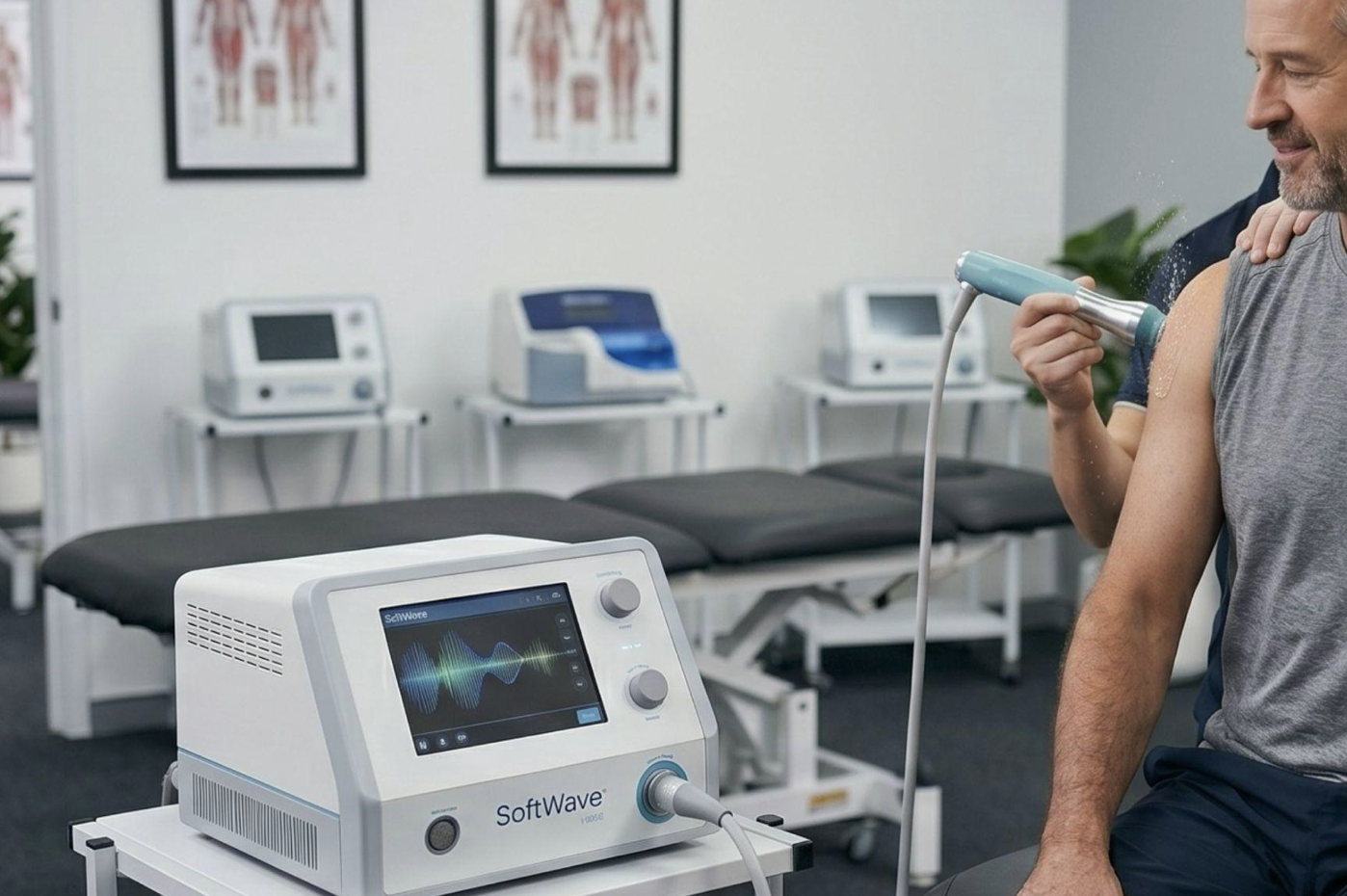
Your initial appointment serves as a comprehensive evaluation to determine if your specific joint issue will respond favorably to acoustic wave care. The technician applies a standard conductive gel to the skin to ensure the acoustic waves travel into the body without reflecting off pockets of air. They then move the applicator head slowly across the affected area while delivering low-energy pulses to identify areas of tissue distress.
You will feel a deep, dull ache when the device passes over areas harboring chronic inflammation or hidden scar tissue. This sensation confirms the device is hitting the correct target, and the technician will adjust the energy delivery based on your comfort level. The active mapping process takes roughly ten to twenty minutes per joint, and most patients report an immediate increase in range of motion right after the session. This rapid change occurs because the acoustic waves temporarily disrupt the pain signals traveling from the joint to the brain.
How Does Acoustic Therapy Break Up Restrictive Internal Scar Tissue?
Following an injury or years of repetitive strain, the body deposits dense, disorganized collagen fibers known as scar tissue to protect the area. While scar tissue is useful for short-term stabilization, it lacks the elasticity and blood supply of healthy, normal tissue. Over time, these dense adhesions bind muscles, tendons, and ligaments together, severely locking down your natural joint mechanics.
The high-velocity pressure waves break the rigid bonds of these internal adhesions without harming the surrounding flexible tissue. Shattering these restrictive barriers restores natural sliding mechanics between your muscles and tendons, reducing friction during movement. As the scar tissue dissolves, it opens up compressed capillary pathways, allowing fresh oxygen to saturate the area. This structural clearing allows the joint to move through its full, native range of motion without triggering sharp catches of pain.
Frequently Asked Questions
How Many Softwave Therapy Sessions Are Typically Required for Lasting Relief?
Most individuals require a series of three to eight sessions scheduled roughly one week apart to achieve optimal, long-term tissue repair. While some immediate relief occurs due to temporary nerve numbing, structural changes like stem cell recruitment take time to mature. The exact number of visits depends on the severity of your joint wear and how long the condition has existed.
Is There Any Downtime or Restriction on Physical Activity After a Session?
There is zero required downtime after an acoustic wave session, and you can drive yourself home and return to work immediately. Doctors recommend avoiding strenuous, high-impact exercise for twenty-four hours post-treatment to allow the cellular signaling cascade to progress undisturbed. Regular daily walking and standard light movements are highly encouraged to promote healthy circulation throughout the treated area.
Does the Treatment Hurt During the Application?
The treatment creates a unique, deep pulsing sensation when passing over areas of active inflammation or scar tissue, which can feel temporarily intense. The technician maintains constant communication and can instantly lower the energy delivery to match your personal tolerance level. Healthy areas of the body feel absolutely nothing during the application, and any discomfort stops completely the moment the device is lifted.
Can I Receive This Care If I Have Had a Total Joint Replacement?
Yes, you can safely receive this treatment if you have artificial joints, metal plates, or orthopedic screws. Because the electrohydraulic waves do not produce heat, they will not warm up or damage surgical implants or surrounding bone cements. The treatment helps relax the tight, scarred muscle groups that often develop around old surgical sites.
Are the Results of Electrohydraulic Shock Wave Therapy Permanent?
The structural changes achieved through this technology, such as broken-up scar tissue and new blood vessel growth, are permanent additions to your anatomy. However, the treatment cannot stop the natural aging process or prevent future injuries if you subject the joint to new physical trauma. Maintaining good movement mechanics and proper nutrition helps protect your newly recovered joint tissue for years to come.
Upgrade Your Daily Mobility and Living Comfort
Take the first step toward living without constant physical limitations by connecting with Future Hope Total Health. Our practice utilizes advanced restorative modalities to address the true root causes of your chronic joint discomfort and mobility restrictions. We build customized care plans that support your body's natural healing abilities without relying on invasive surgeries or temporary fixes. Contact us today to learn how our personalized memberships can help you regain your strength and live life to the fullest.