
How Non-Invasive Neurofeedback Brain Training Restores Sleep and Concentration Patterns Safely
/
Chronic exhaustion and poor focus can point to neurological dysregulation in the brain. When your nervous system is under long-term stress or strain, its natural electrical patterns can shift, affecting sleep quality, attention, and mental clarity. In most cases, quick fixes like stimulants during the day or sedatives at night only mask the symptoms without addressing the underlying imbalance.
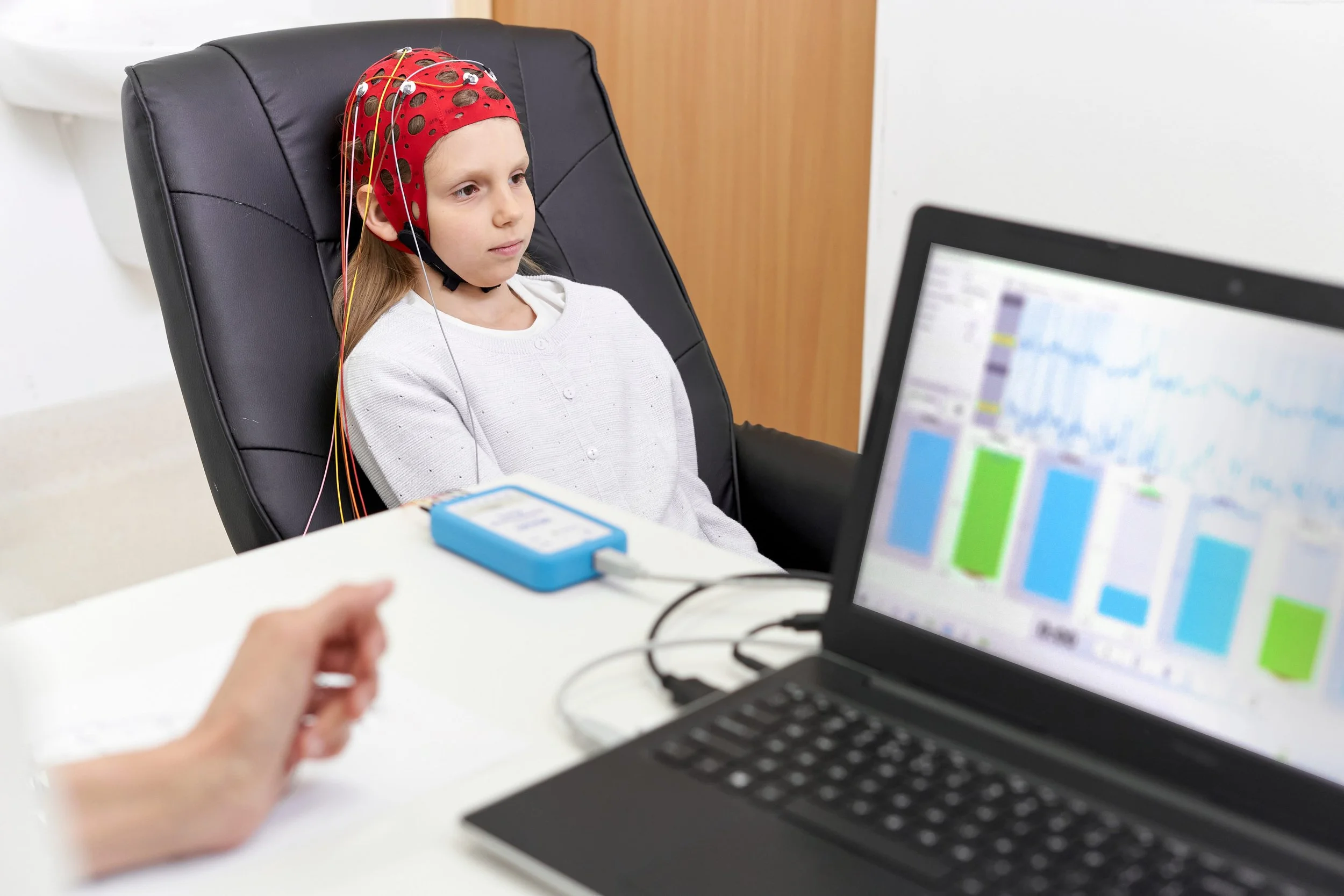
Neurofeedback brain training offers a non-invasive approach that works with your brain’s real-time electrical activity. By measuring and feeding this information back in milliseconds, it helps guide your nervous system back toward a more balanced state.
Instead of altering receptor sensitivity artificially, this method relies on the biological phenomenon of neuroplasticity and synaptic pruning. By rewarding optimal timing networks, you are physically re-routing thalamocortical loops, the deep brain structures that function as the central pacemaker for both your waking attention and your biological rest-activity cycle
Understanding How Your Brain Controls Sleep and Focus
The brain continuously produces tiny electrical impulses that organize into distinct patterns across specific frequency ranges, known colloquially as brainwaves. These frequencies act as the operational system for your cognitive, emotional, and physiological states.
When your neurological architecture functions correctly, these frequencies smoothly transition depending on the demand of the moment. High-frequency waves handle active cognitive processing, while low-frequency waves govern restorative sleep states. Neurological dysregulation occurs when specific regions of your brain run these frequencies either too high or too low at improper times.
This fixed dysregulation often manifests as asymmetries between the left and right hemispheres, or an inappropriate theta-to-beta ratio in the frontal cortex. When localized brain regions lose their network coherence, your central nervous system cannot match its electrical output to environmental demands, forcing you to operate in a state of perpetual metabolic inefficiency.
4 Key Brainwave Patterns That Influence Sleep and Attention
To understand how neurofeedback supports sleep and attention regulation, you first need a clear view of the brain’s core frequency bands. Each band plays a distinct role in how your mind shifts between focus, relaxation, creativity, and deep recovery.
Beta Waves (12–38 Hz): Active Thinking And Cognitive Drive
Beta waves are fast brain rhythms responsible for active thinking, problem-solving, and outward concentration. In a balanced state, they support your ability to stay alert, productive, and engaged in daily business or task-driven environments.
However, when high-frequency beta activity becomes overproduced, it can shift your system into a persistent overactive state. This may result in an overstimulated mind and physical restlessness that makes sleep difficult or even impossible.
● Supports active thinking, problem-solving, and outward focus
● Necessary for daily business performance and productivity
● Overproduction can trigger racing thoughts and restlessness
● Can contribute to difficulty initiating or maintaining sleep
Alpha Waves (8–12 Hz): Calm Awareness And Mental Transitioning
Alpha oscillations function as the brain's primary inhibitory gating mechanism, actively quietening irrelevant sensory inputs to preserve cognitive resources. When your brain fails to generate a robust posterior alpha rhythm upon closing your eyes, your nervous system cannot drop its defensive posture, directly blocking the activation of the parasympathetic system needed for sleep onset.
They support internal processing and imagination when the brain is less externally focused. If these specific waves remain disproportionately elevated while you are awake, they often disrupt mental clarity and overall attentional endurance. This shift is often associated with reduced attention control and mental drift.
● Theta waves are heavily involved in deep memory processing, emotional filtering, and creative insight.
● This frequency band dominates during twilight states as you drift between wakefulness and deeper sleep stages.
● Excess daytime theta activity in the frontal lobe acts like a neurological brake, causing severe distractibility.
● Training your system to manage daytime theta waves directly improves long-term focus and cognitive processing speeds.
Theta Waves (4–8 Hz): Creativity, Light Sleep, And Attention Stability
These frequencies drive internal mental processing and imaginative thought, typically manifesting during meditation, creative daydreaming, or light slumber. They support internal processing and imagination when the brain is less externally focused.
If these specific waves remain disproportionately elevated while you are awake, they often disrupt mental clarity and overall attentional endurance. This shift is often associated with reduced attention control and mental drift.
● Active during light sleep, meditation, and creative thought
● Supports imagination and internal mental processing
● Excess theta during the day may indicate attention instability
● Can contribute to distractibility and reduced cognitive speed
Delta Waves (0.5–4 Hz): Deep Sleep And Full Recovery
Delta waves are the slowest brainwave frequency and are essential for deep, dreamless sleep. This stage is where your body performs its most important restorative functions, including physical repair and internal recovery processes.
Even with sufficient sleep duration, a lack of delta activity can leave you feeling unrefreshed. This can directly affect how rested and restored you feel upon waking.
● Drives deep, restorative, dreamless sleep
● Supports tissue repair and metabolic recovery processes
● Essential for memory consolidation and immune regulation
● Low delta activity may lead to non-restorative sleep and morning fatigue
Core Principles Behind Neurofeedback-Based Neurological Restoration
Neurofeedback works as an advanced learning system for your central nervous system, built on clean biological mechanisms rather than chemical intervention. It combines precise data collection, psychological learning theory, and neuroplasticity to gradually shift and stabilize your baseline brain function toward healthier patterns.
1. Quantitative EEG Mapping for Baseline Brain Assessment
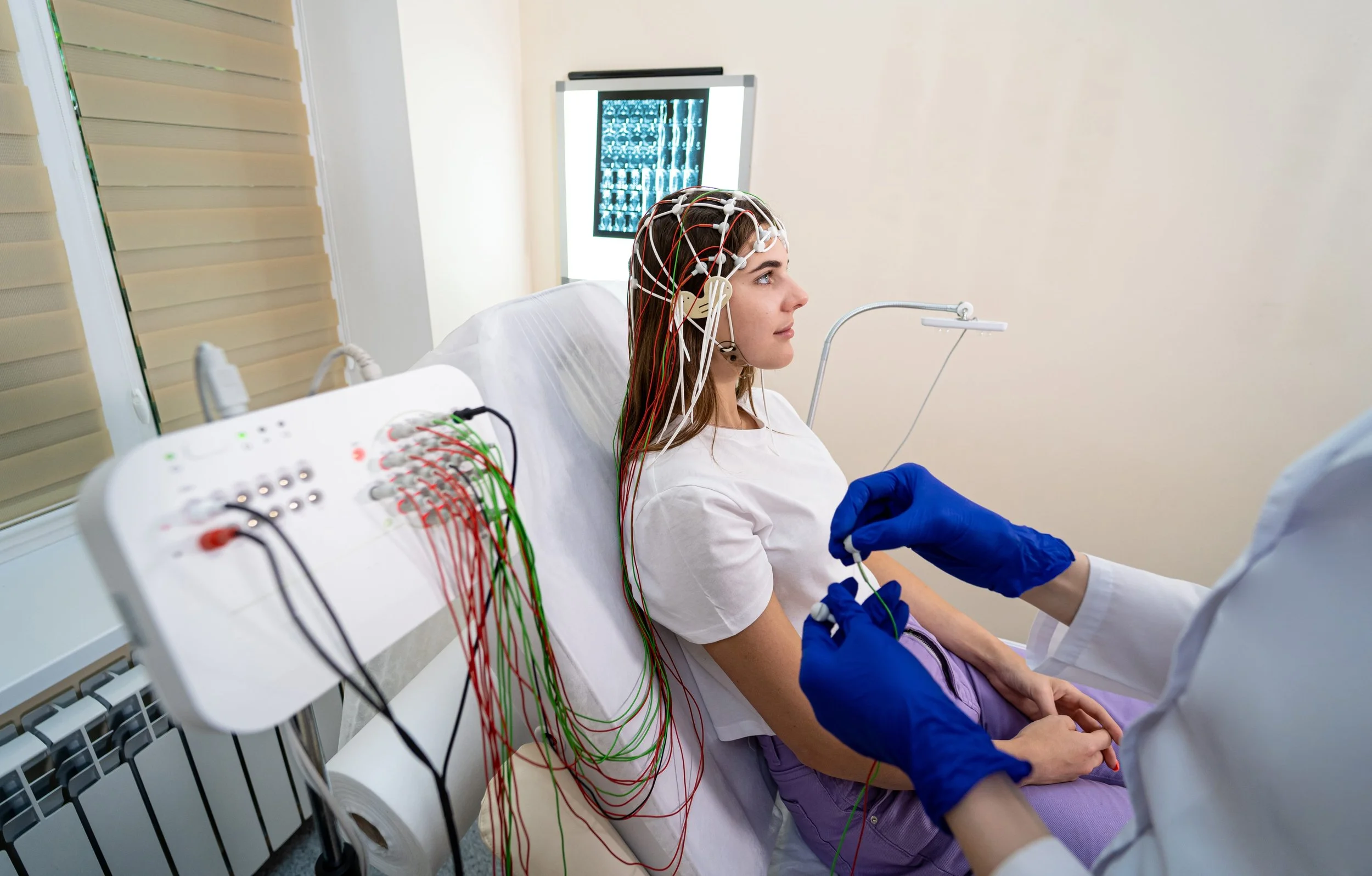
Before any restorative process begins, advanced diagnostic tools measure your brain’s electrical activity across multiple points on the scalp. This creates a detailed map of your neurological architecture, highlighting exact regions where brainwave frequencies are higher or lower than healthy reference standards.
This mapping removes uncertainty from the process and allows for a highly individualized training protocol designed specifically around your sleep challenges, attention difficulties, or concentration concerns. Modern qEEG protocols go beyond simple surface mapping by tracking z-score standard deviations in real time against an extensive normative database, allowing your provider to locate deep-tissue dysregulation within specific Brodmann areas.
2. Operant Conditioning Mechanics for Natural Brain Training
Your brain is naturally driven toward efficiency, comfort, and reward. Neurofeedback uses operant conditioning to work with this instinct, reinforcing healthier brainwave patterns every time they appear. There is no external energy introduced into your body. Instead, your nervous system continuously adjusts its own activity based on immediate audio and visual feedback, gradually learning which patterns are most stable and efficient.
When your brain hits these target metrics, it triggers the release of microscopic bursts of endogenous dopamine, satisfying your nervous system's biological drive for homeostatic efficiency and permanently updating your neural baseline.
3. Real-Time Feedback Loops That Guide Neural Adjustment
During each session, sensitive sensors track your brain activity and instantly translate it into interactive feedback such as visual media or audio tones. When your brain moves toward optimal sleep or concentration states, the movie brightens, or the sound becomes clearer. When activity shifts away from those states, the display dims.
Your brain naturally responds to this feedback by adjusting its own output to maintain a smooth, stable experience.
4. Harnessing Neuroplasticity for Lasting Brain Change
The human brain is capable of lifelong structural adaptation through neuroplasticity. Neurofeedback leverages this ability by repeatedly guiding your brain into balanced, high-efficiency frequency states across multiple sessions.
Over time, these reinforced patterns become more stable, eventually forming your brain’s preferred and default operating state.
5. Self-Sustaining Long-Term Neurological Adaptation
Neurofeedback concentrates on actual skill acquisition within the nervous system, as opposed to medication that leaves your body in a matter of hours. Your brain maintains its capacity to autonomously transition into sustained beta concentration or deep delta sleep.
These improvements persist even after training ends because your brain internalizes the regulated patterns as its new baseline for function.
Limits of Conventional Brain-Based Treatments
Many standard approaches to sleep and focus rely on short-term chemical changes rather than true neurological correction. Synthetic sedatives induce chemical sedation but can disrupt natural brain architecture and carry dependency risks. Stimulants work oppositely by temporarily increasing dopamine and norepinephrine but often lead to burnout and strong evening crashes. Even passive diagnostics only measure the issue without offering any active path to retrain or correct it.
Sleep medications may suppress deep delta waves and REM cycles, which are essential for brain recovery and waste clearance. This can leave you feeling groggy and mentally foggy the next day, often leading to reliance on stimulants to function. Stimulant-based approaches can also overstimulate the nervous system, keeping your body in a prolonged fight-or-flight state and creating cycles of short focus bursts followed by anxiety, tension, and energy crashes.
This biochemical suppression prevents your glymphatic system from performing its critical nighttime cleanup. Without proper delta-wave synchronization, your brain cannot flush out daily metabolic waste products and neurotoxic proteins, meaning your morning cognitive fog is a literal symptom of un-cleared cellular debris.
The Progressive Step-by-Step Neurofeedback Process
The path to restoring your cognitive stamina and sleep cycles involves a methodical, data-driven framework. Each session builds logically on the last to ensure safe, stable, and sustainable neurological progress.
Step 1: Initial Mapping and Baseline Tracking
The process begins with a quiet diagnostic setup where a lightweight cap with passive sensors is placed on your scalp. These sensors do not emit electrical currents or radiation; they simply record your natural brainwave activity across different regions of the head.
This baseline scan identifies where brainwave patterns are deviating from expected synchronization and establishes the foundation for a fully individualized training plan.
Step 2: Custom Protocol Program Design
Once the brain mapping is complete, your provider reviews the data alongside your specific daily challenges, such as nighttime waking, sleep disruption, or mid-afternoon cognitive fatigue. If excess slow-wave theta activity is present in the frontal lobe during work hours, the protocol is designed to strengthen fast-wave concentration patterns.
If elevated beta activity is contributing to evening anxiety, the focus shifts toward increasing alpha and delta wave regulation. This ensures your training plan is directly aligned with how your brain is functioning in real-life conditions.
These modern programs target specific Sensorimotor Rhythms (SMR). Training your SMR band increases the body's internal threshold for physical and sensory disturbances, acting as a neurological shield against sudden nighttime awakenings.
Step 3: Interactive Visual and Audio Training Sessions
During 30-minute training sessions, you sit comfortably while connected to the monitoring system and engage with a responsive visual or audio interface that reflects your brain activity in real time. As your brain naturally shifts between electrical states, the system responds instantly, reinforcing regulated patterns through interactive feedback.
● The visual or audio interface responds directly to your brainwave activity in real time
● Progress in the experience only continues when your brain reaches targeted frequency states
● Your nervous system is trained to recognize and maintain more stable, efficient patterns
● Repeated exposure strengthens self-regulation of attention, focus, and calm alertness
Step 4: Iterative Data Review and Protocol Tracking
At the end of each session, your provider conducts a detailed review of your brain activity data using a structured tracking system. This includes measuring how long your brain maintained target frequency states and how quickly it recovered after distraction.
These insights are used to continuously refine and adjust your protocol so it evolves alongside your neurological progress. The result is a training system that remains adaptive, precise, and aligned with your changing cognitive and sleep needs over time.
This tracking monitors shifting metrics in magnitude, dominant frequency, and phase lag. By watching these structural mathematical trends, your provider ensures that your training adapts to your nervous system's increasing cognitive capacity.
Anticipated Behavioral Outcomes and Timeline
This framework outlines how your brain typically responds to neurofeedback training over time, moving from initial adaptation into deeper stabilization and long-term integration. The progression is gradual, with each stage reflecting measurable shifts in sleep, focus, and overall cognitive regulation rather than instant change.
Sessions One to Five: Early Neural Adjustment Phase
In the first handful of sessions, your brain starts responding to the feedback in small but noticeable ways. You may feel a slight easing of internal tension, a more settled emotional baseline after each visit, and a tendency for sleep to feel deeper or more continuous over the weekend.
Sessions Six to Fifteen: Stabilizing Attention and Sleep Rhythm
As training builds consistency, your ability to stay mentally locked in for longer stretches begins to strengthen. Focus feels less scattered, nighttime interruptions start to reduce, and your sleep begins shifting into a more naturally sustained rhythm without as much effort.
Sessions Sixteen to Thirty Plus: Long-Term Pattern Integration
By this stage, the brain begins treating these new patterns as its default operating state. Focus during the day feels more steady and less forced, while sleep becomes more naturally restorative, with both states requiring less conscious management or external support.
Frequently Asked Questions
Is neurofeedback safe, and does it hurt?
Yes, neurofeedback is completely safe, non-invasive, and painless. It only uses scalp sensors to read brain activity and does not send electricity, chemicals, or any form of stimulation into your body. There are no known risks of tissue damage, side effects, or surgical complications.
How many sessions are needed for lasting results?
Most people complete between 20 and 40 sessions, depending on their symptoms and baseline brain activity. Some improvements in sleep and focus can appear within the first few weeks, while more stable, long-term changes develop as training continues.
Can neurofeedback help with attention and focus issues?
Yes. Neurofeedback can support attention difficulties by helping regulate brainwave patterns linked to focus and mental clarity. It works by encouraging a healthier balance between slow and fast brainwave activity, which can improve concentration and reduce mental drifting over time.
To explore a personalized evaluation and learn how advanced brainwave training can be integrated into your wellness plan, you can connect with our experts at Future Hope Total Health and schedule a comprehensive neurological mapping session designed to help you better understand your brain’s activity patterns and long-term cognitive potential.